Understanding Concrete Damage
Before you start any repair, it’s important to understand what caused the problem. Concrete damage can appear in different forms, and each type requires a fix.
Common Types of Concrete Damage
- Hairline Cracks: Caused by shrinkage during curing or temperature changes. These are mostly cosmetic but can worsen over time if ignored.
- Structural Cracks: Wider cracks that may signal settling or heavy loads. These need deeper filling and reinforcement.
- Surface Scaling or Spalling: The top layer flakes or chips away, typically from freeze-thaw cycles, moisture, or deicing salts.
- Discoloration and Stains: Caused by chemical exposure, oil spills, or moisture penetration.
- Uneven or Sunken Slabs: Result from soil erosion or poor compaction beneath the concrete.
Tools and Materials You’ll Need
Having the right equipment makes the process smoother and ensures longer-lasting results.
Essential Tools
- Chisel and hammer
- Wire brush
- Pressure washer or garden hose with spray nozzle
- Mixing bucket
- Margin trowel or putty knife
- Concrete float or finishing trowel
- Safety gear (gloves, mask, goggles)
Repair Materials
- Concrete patch or repair mortar
- Epoxy or polyurethane crack filler
- Bonding agent
- Sealant or waterproof coating
- Concrete resurfacer (for large surface repairs)
These tools and materials can handle most residential repair projects, from patios to driveways, without needing commercial machinery.
Step-by-Step Concrete Crack Repair
When cracks appear, repairing them quickly prevents further damage from moisture or freeze-thaw expansion.
Step 1: Clean the Crack
Use a wire brush or chisel to remove loose debris, dirt, and crumbling concrete. Rinse and let the area dry completely.
Step 2: Apply a Bonding Agent
For deeper cracks, a bonding agent helps the new material adhere to the old surface. Brush it along the edges before applying your patching compound.
Step 3: Fill the Crack
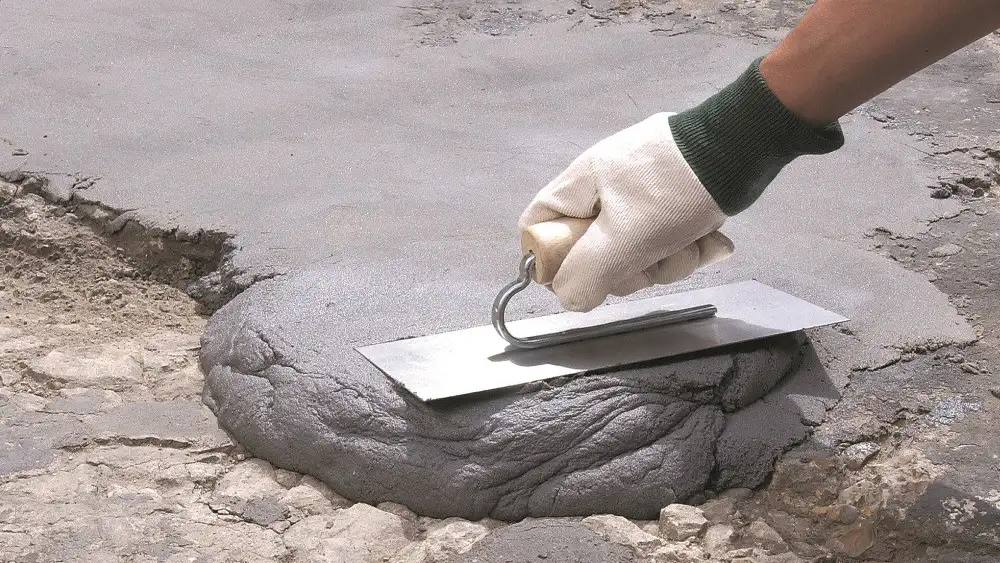
For small cracks, apply an epoxy or polyurethane filler directly into the gap using a caulking gun or trowel. For larger cracks, mix concrete repair mortar to a smooth consistency and press it firmly into the opening.
Step 4: Smooth and Finish
Use a trowel to smooth the surface so it blends evenly. Allow it to cure according to the product instructions, mostly 24-48 hours.
Step 5: Seal the Surface
Once cured, apply a concrete sealant to protect against water and chemical damage. This final step enhances durability and keeps your surface looking clean.
Guide to Repairing Concrete Patios
Outdoor patios face constant exposure to sunlight, moisture, and temperature changes. Cracks or discoloration are common, but restoration is simple if addressed early.
Step 1: Inspect and Clean the Surface
Look for surface cracks, chipping, or stains. Pressure wash the patio to remove dirt and debris. Let it dry fully before applying any materials.
Step 2: Patch Cracks and Holes
For minor damage, use a patching compound or epoxy filler. Larger holes may require resurfacing with a thin layer of fresh concrete.
Step 3: Apply a Concrete Resurfacer
For patios with extensive wear, apply a resurfacer with a squeegee or trowel. This creates a fresh, uniform surface. Work in small sections to ensure even coverage.
Step 4: Add Decorative Finishes (Optional)
You can apply stains, dyes, or coatings to give your patio a unique look. A popular choice is acid staining, which provides a marbled, rustic finish ideal for homes in Central Oregon.
Step 5: Seal the Patio
Finish with a waterproof sealant to prevent moisture damage, especially in climates with seasonal rain or freezing temperatures like Prineville, OR.
Concrete Restoration Techniques for Larger Areas
When wear and tear go beyond cracks, more advanced concrete restoration techniques are needed. These methods are great for garages, commercial spaces, or older patios.
Grinding and Sealing
For uneven or dull surfaces, mechanical grinding removes imperfections and exposes a smooth layer beneath. Afterward, sealing locks out moisture and enhances shine.
Resurfacing
A resurfacer can be applied to cover large areas showing spalling or discoloration. It’s an efficient way to renew old concrete without full replacement.
Concrete Overlays
Thin overlays or microtoppings allow you to apply decorative finishes like stamped or polished concrete. This approach works well when you want both function and design.
Reinforcing Weak Areas
For structural repairs, steel mesh or rebar may be used to strengthen slabs before applying new concrete. This technique is essential for driveways or heavy-use areas.
How to Repair Discolored or Stained Concrete
Stains are common but easily fixable with the right approach.
Step 1: Identify the Cause
Oil, rust, mold, or chemical spills each require different cleaning methods.
Step 2: Use Appropriate Cleaners
- Oil stains: Degreaser or baking soda paste
- Rust: Lemon juice or rust remover
- Mold or mildew: Bleach solution
- General discoloration: Concrete cleaner or acid wash (use with caution)
Step 3: Consider Staining or Coating
After cleaning, applying an acid or water-based stain can hide imperfections and refresh the appearance. Decorative coatings also add protection against future damage.
Preventing Future Concrete Damage
Prevention is the most effective repair technique of all.
Maintenance Tips
- Seal Regularly: Apply a concrete sealer every 2-3 years to keep water and chemicals from penetrating.
- Clean Spills Promptly: Oil and chemicals can stain and weaken the surface if left untreated.
- Avoid Harsh Deicers: Use sand or non-corrosive alternatives during winter to prevent spalling.
- Monitor Drainage: Ensure water flows away from slabs to prevent pooling and freeze-thaw cracking.
- Schedule Periodic Inspections: Look for small issues and repair them before they expand.
When to Call a Professional
While this guide to concrete repair gives you the tools to handle small fixes, some situations need professional expertise. You should call a concrete coating company if:
- Cracks are wider than ¼ inch or appear to affect structural integrity.
- Concrete has severe spalling, scaling, or discoloration.
- You need decorative finishes or epoxy coatings for appearance and durability.
- Large commercial or industrial areas require specialized equipment.
Professionals can provide solutions like epoxy floor coatings, resurfacing, polishing, and waterproofing that go beyond DIY capabilities.
Why Homeowners in Prineville, OR Trust Premier Polished Concrete LLC
We take pride in helping homeowners and businesses keep their concrete surfaces strong and beautiful. With over 20 years of experience, we’ve mastered every level of concrete repair, restoration, and coating, from small cracks in patios to large-scale commercial floors.
We’re directly involved in every project to ensure the quality and results meet our standards. Whether it’s a garage, basement, or outdoor patio, we tailor our approach to your needs and environment.
If you’re ready to restore your concrete to its original strength and finish, reach out to us today at (503) 841-9383.
Conclusion
This concrete repair guide gives you the tools and knowledge to handle most small-scale repairs around your home or business. By following proper cleaning, filling, and sealing steps, and understanding when to call for help, you can keep your surfaces safe and visually appealing for years.
Whether you’re looking to refresh your driveway or completely restore your patio, concrete doesn’t have to be a headache. Start small, stay consistent, and when in doubt, trust professionals who specialize in durable, long-lasting concrete solutions.
For trusted, hands-on service in Prineville, OR, contact Premier Polished Concrete LLC at (503) 841-9383. We’re here to help bring your concrete back to life.